
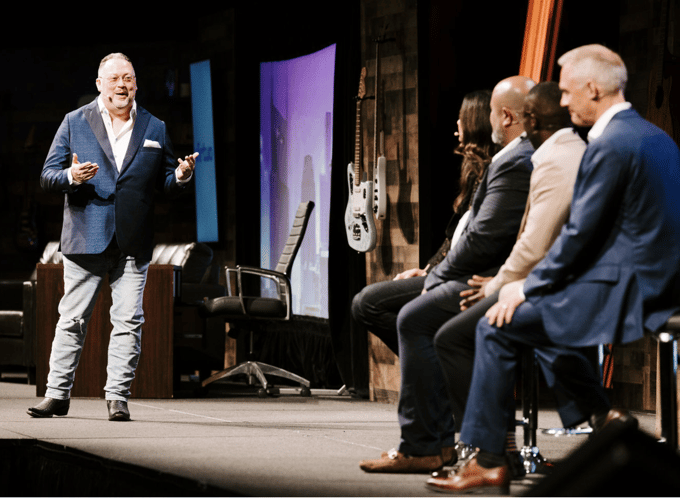
If you’re asking whether the Sales & Marketing Leadership Summit is worth the investment, you’re asking the right question. Because in today’s market, this isn’t about attending another event — it’s about making a business decision. With margins tightening, discounts becoming the default, and teams working harder for diminishing returns, every investment should be evaluated the same way: will this improve performance, and will it pay for itself?
Before you even consider the cost of attending, it’s worth taking a closer look at the cost most builders are already absorbing. Many are still hitting their sales numbers, but only by giving margin away to do it. Incentives have become a crutch. Leadership teams are caught in a constant push-and-pull between driving volume and protecting profitability. And underneath it all, there’s often no clear, aligned system for how to fix it. The result is a quiet but consistent erosion of value — one that doesn’t show up as a line item, but plays out across every deal where margin is negotiated away.
That’s what makes this Summit different. This isn’t a traditional conference filled with motivational talks and ideas that fade by Tuesday. It’s a working session for leadership teams — a place where the focus shifts from listening to building. The goal isn’t to leave inspired; it’s to leave with a plan. Over the course of the Summit, leaders begin developing a practical, executable framework for protecting margin, eliminating misalignment between departments, and creating systems that support confident, value-driven selling. It’s work that directly connects to business performance, not just theory.
When you think about return on investment in that context, it becomes much more tangible. What would it mean to your business if, within 90 days, your team relied less on discounting? If sales cycles shortened without increasing incentives? If your sales team operated with greater confidence and consistency, and leadership, marketing, and sales were aligned around a shared strategy? These aren’t abstract outcomes — they’re the kinds of shifts that happen when organizations move from reactive tactics to intentional systems. And the financial impact of those shifts compounds quickly. One stronger deal. One preserved margin. One community operating with greater discipline. It doesn’t take much to create a return that far exceeds the cost of attending.
Still, skepticism is fair — and expected. That’s why the Summit is backed by a clear standard. If you don’t see 100x the value of your investment within 90 days — in the form of stronger margins, fewer discounts, and improved performance — the cost of your ticket is refunded. No hoops, no fine print. Because the goal isn’t attendance. It’s results.
So yes, it’s worth asking whether the Summit is worth it. But the more important question is what it’s costing to stay where you are. If discounting continues to drive your sales, if margins continue to erode, and if leadership remains misaligned, that cost will far outweigh any registration fee.
The leaders who attend the Summit aren’t looking for inspiration alone. They’re looking for clarity, alignment, and a better way to operate in a market that’s only getting more competitive. They’re investing in building something more sustainable — a system that protects value and drives predictable profitability.
And for those leaders, the return isn’t a question. It’s a decision.
.jpeg?height=250&name=SHORESUMMITD23-2024-757%20(1).jpeg)